

Longevity
Healthy cells. Healthy life.
Live better, longer. Discover the secrets of healthy ageing
Healthy ageing is no coincidence – it is the result of many small decisions.
In this guide you will learn which secrets our cells hold, why they are crucial for our health and for ageing, and how you can yourself take influence over your vitality and quality of life.
Table of contents
- 1. Longevity – what it really means
- 2. Living as long as possible? Gladly. But healthy!
- 3. The early signs of ageing – and what really lies behind them
- 4. When we age, our cells are actually ageing
- 5. Halting ageing – just an anti-ageing trick?
- 6. Understanding cellular ageing – three factors that accelerate ageing
- 7. Longevity research shows – it is not down to our genes
- 8. Keeping your cells young and performant – everyday basics
- 9. Complementary methods – more for your cellular health
- 10. Conclusion: Healthy ageing succeeds when we take the needs of our cells into account
Longevity – what it really means
For many people, longevity simply means: living longer. Yet the term longevity means much more than just reaching an advanced age. It describes a life concept. At its centre lies one's own healthspan – that is, the time we spend active, performant and free of chronic complaints. Prevention, personal responsibility and the conscious shaping of the second half of life form its foundation. The goal is not only to gain the additional years of life, but also to experience them with vitality and fulfilment.

Living as long as possible? Gladly. But healthy!
While life expectancy rises, health often lags behind: many people spend the final 8–10 years of their life with limitations and chronic complaints. Longevity research starts precisely here. With the goal of reducing the gap between lifespan and healthspan.
Closing the gap between healthspan and lifespan – the central theme of longevity research
The early signs of ageing – and what really lies behind them
We do not become older suddenly – rather, the first changes appear gradually, and often already in our forties. The changes are often so subtle that they are easily overlooked in everyday life. One person notices that recovery after a strenuous week takes longer; another senses that sleep is no longer as deep and restful as before. Some feel exhausted more quickly, others find that the skin loses elasticity or that the joints no longer feel quite as supple.
By the age of 50, the topic usually becomes impossible to miss: energy no longer lasts for everything one sets out to do, strength fades, recovery after sport or illness takes longer. In addition, there is often the oppressive feeling that one's own vitality and ability to concentrate is gradually slipping away. On top of this, sleep quality often deteriorates more and more.
Among the most common early symptoms of ageing are:
- Skin changes such as wrinkles, dryness or loss of elasticity
- Thinning or greying hair as well as hair loss
- Joint complaints and decreasing mobility
- Loss of muscle strength and physical endurance
- Sleep problems, constant tiredness or exhaustion
- Memory and concentration weaknesses
But what we perceive as ageing are only the visible and tangible symptoms. The actual ageing process begins much earlier and much deeper: at the cellular level. Every change, whether in the skin, the joints or the brain, ultimately goes back to the fact that our cells lose performance over the years.

When we age, our cells are actually ageing
Every human being is made up of around 40 trillion cells – they are the smallest, but most important units of our body. They control everything: our thinking, our movement, immune defence, but above all our regeneration. For the latter, they make particular use of our supposed rest phases, such as sleep. During this time, the cells work at full speed to repair damaged structures, restore functions and revitalise the body. For this they possess special abilities: they can not only regenerate and repair themselves, but also renew themselves regularly – some even at a rapid speed.
On average, our cells only live 7 to 10 years. That means: many of our cells are significantly younger than we are ourselves, since they are regularly replaced by the body. In this way, the body prevents cells that are too old or damaged from losing their function and weakening the organism. This constant exchange acts like a “refresh treatment” for our body and is decisive for our well-being – especially in older age.
It becomes problematic when this rhythm falters. If the natural process of regeneration and renewal falls out of balance, old cells can no longer be optimally broken down and renewed. Damaged or non-functional cells can thus accumulate in the body and lead to complaints. Then we feel tiredness, declining performance, or become more susceptible to illness.
Some cells divide frequently and renew themselves quickly, others – such as certain nerve cells – stay with us our whole life long.

Halting ageing – just an anti-ageing trick?
Is rejuvenation really possible? This question occupies not only science but also millions of people worldwide – and the answer depends greatly on how one defines “rejuvenation”. The anti-ageing industry offers a seemingly simple solution: “From old to young” is its promise. But what is usually meant by this only scratches the surface: creams and treatments are intended to soften wrinkles, tighten the skin or conceal grey hair – and thus above all rejuvenate one's outward appearance.
The approach of longevity research is quite different: here the focus is not on appearance, but on cellular health, the prevention of age-related diseases and a long-term increase in quality of life. The foundation here is cellular health – to enable rejuvenation from the inside out.
Understanding cellular ageing – three factors that accelerate ageing
- Lack of energy for the cells
The mitochondria are the powerhouses of our cells. With increasing age they often lose efficiency and provide less energy in the form of ATP (adenosine triphosphate). This can lead to repair processes running more slowly and damage to the cells building up.
- Accumulation of “zombie” cells
Old, non-functional cells – also called “zombie” cells – can remain in the body and accumulate there. Although they no longer have a function, they nevertheless release inflammation-promoting substances. These substances can damage their surroundings, block regeneration and, in the long term, cause chronic complaints.
- Chronic silent inflammation (inflammaging)
Often unnoticed, persistent inflammation can develop in the body. Unlike acute reactions, it strains tissue over a long period, disrupts cell function and accelerates the ageing process.
Longevity research shows – it is not down to our genes
Science shows that our genes only determine 10–15 % of how we age. Lifestyle and environmental factors have a much greater influence.
Nutrition, exercise, sleep, stress management – all these factors can directly affect how young or old our cells are.
That means: each one of us has the possibility, through conscious decisions and routines, to promote their own cellular health and to influence the biological ageing process.
Keeping your cells young and performant – everyday basics
These factors support cellular health in everyday life – and are the basis of a sustainable longevity strategy:
- Nutrients:
A balanced diet with vitamins, trace elements and antioxidants protects the cells from damage and supports repair processes.
- Water:
Sufficient fluid ensures that nutrients are transported and waste products are efficiently excreted.
- Sleep:
During the deep sleep phase, numerous regeneration processes take place. Restful sleep is therefore one of the most important prerequisites for cellular repair.
- Exercise:
Physical activity increases circulation, improves oxygen supply and activates the metabolism of the cells.
- Oxygen:
Every cell depends on oxygen to generate energy. Fresh air and an active lifestyle are therefore essential.
- Stress reduction:
Chronic stress weakens the cells, since it promotes inflammatory processes. Relaxation techniques such as meditation or yoga can help to reduce stress.
- Protection from toxins:
Environmental toxins, nicotine or oxidative stress can permanently damage cellular structures. Consciously avoiding such factors prolongs the health of the cells.
Complementary methods – more for your cellular health
Alongside nutrition, sleep and exercise, research discusses further approaches to supporting cellular health. Examples are:
- Oxygen therapy
(e.g. IHHT – interval hypoxia-hyperoxia training): through targeted variations in oxygen content, cellular respiration is to be trained and mitochondrial function improved.
- Food supplements:
Antioxidants such as coenzyme Q10, omega-3 fatty acids or certain vitamins can protect the cells from oxidative stress and support metabolic processes.

- Magnetic field application:
Our cells themselves generate a weak electromagnetic field. External, static magnetic fields are said to gently support these processes and thereby be able to promote regeneration and repair processes. Initial investigations indicate that this could stimulate circulation, oxygen supply and energy production in the mitochondria.
- Cold and heat applications:
Contrast baths, sauna sessions or cold therapies can promote circulation, reduce stress and stimulate regeneration processes.
- Fasting:
1–2 fasting days per week or also intermittent fasting can slow the ageing process and increase your own energy level.
- Endurance training:
Regular moderate training improves oxygen supply, increases the performance of the mitochondria and supports cellular regeneration.
"Do you have questions about magnetic field application?
Our advisory team will be happy to help you."
Get advice now
Conclusion: Healthy ageing succeeds when we take the needs of our cells into account
Energy, regeneration and protection are decisive for how quickly we age. With sufficient sleep, regular exercise and a balanced daily routine, we create the basis for good cellular health – additional methods can meaningfully support this process.
Frequently asked questions
What is the difference between anti-ageing and longevity?
Anti-ageing focuses primarily on delaying outward signs of ageing – that is, looking younger and maintaining youthful vitality for as long as possible. Longevity, on the other hand, aims at staying healthy, performant and vital for longer – not only outwardly, but on a cellular and physical level.
Who is the longevity approach suitable for?
The approach is in principle aimed at anyone who actively and consciously wants to improve their quality of life in older age — in particular people who feel that regeneration is becoming more difficult, who experience sleep or mobility problems, or who simply want to preserve their vitality and health for longer.
Is healthy ageing guaranteed with these methods?
There is no guarantee. We emphasise that healthy ageing is the result of many small decisions – not a single “anti-ageing trick”. What is important is the consistent implementation of lifestyle measures and, where appropriate, complementary methods.
What are static magnetic fields?
Static magnets generate natural and constant magnetic fields – without an external power source. Kleinsche Fields are also based on static magnetic fields, but use an innovative technology and are additionally registered as a class I medical device. As a result, they are not only simple but also safe to use.
What role does sleep play for cellular health and longevity?
Sleep is central: during the deep sleep phase, extensive repair and regeneration processes take place in the cells. A good quality of sleep is therefore an important prerequisite for cellular health and thus for longevity.
Mattress topper with static magnetic fields: The ideal combination
Our cells regenerate predominantly at night. While we sleep, the important repair processes run at full speed: tissue damage is repaired, new cells are formed, the immune system is activated.
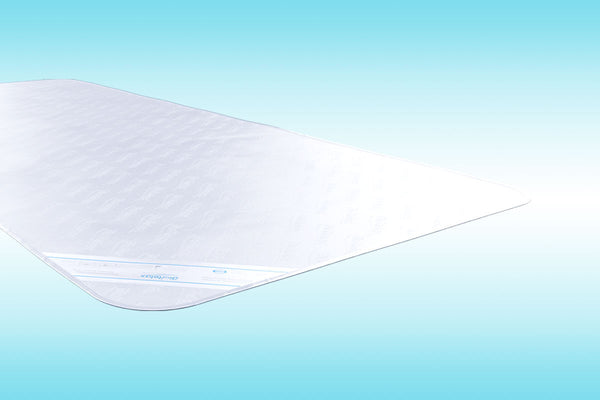
For this reason, the combination of static, permanent magnetic field application with the sleep phase is particularly effective. Application overnight – e.g. with the help of the BioRelax Mattress topper – can support the natural repair mode without disturbing sleep.
Benefits of overnight application:
- Maximum regeneration:
During deep sleep, repair processes in the cells run at full speed.
- No disturbing factors:
No electrosmog burdens the cells during regeneration.
- Gentle continuous application over hours:
The natural and gentle effect accompanies the body all night long.
- Improved sleep:
Many users report more restful sleep.